
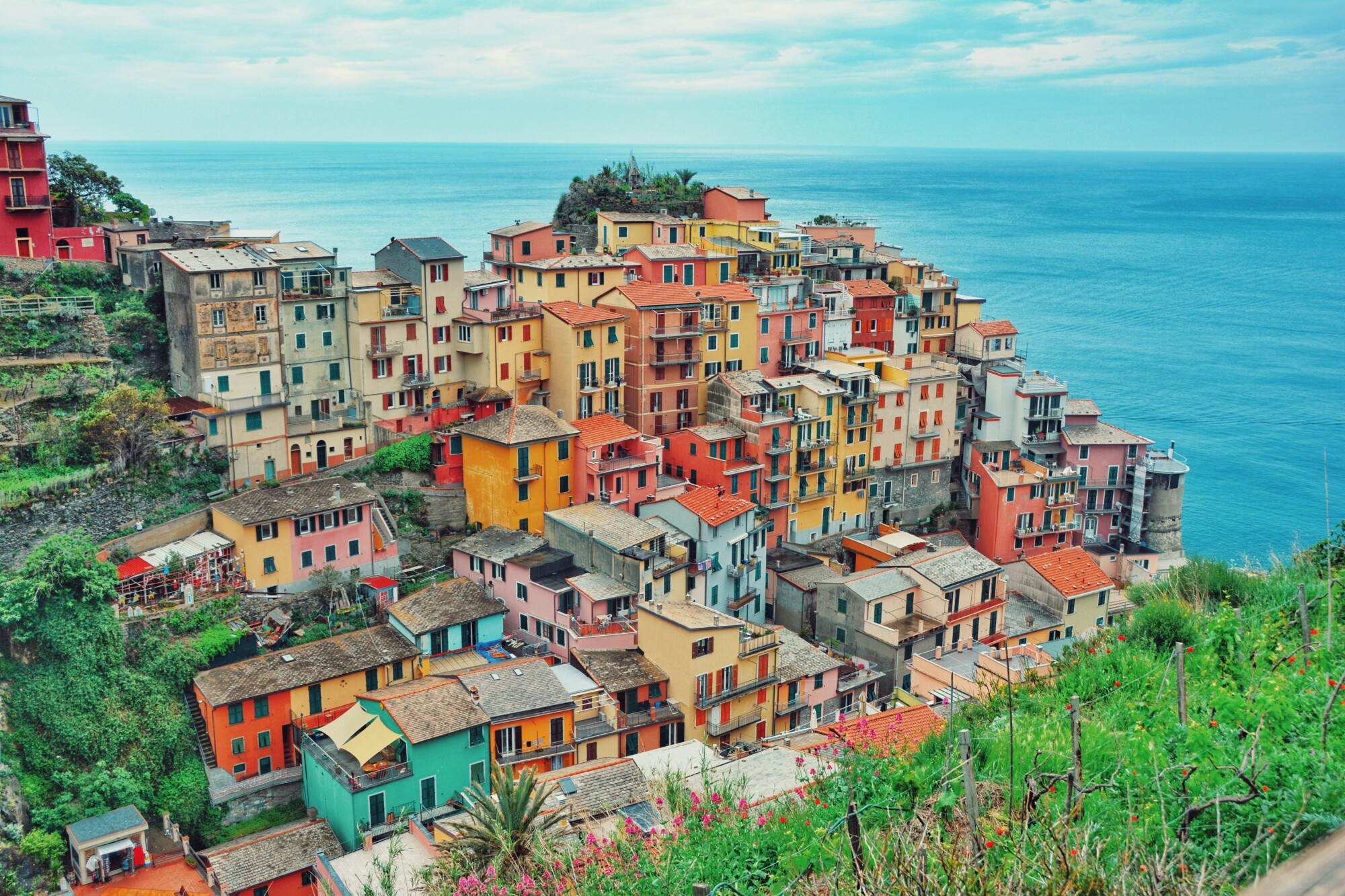
CINQUE TERRE ITALY
Travel to the Cinque Terre: A Journey Through Italy’s Coastal Villages
Discover Cinque Terre (Five Lands), a UNESCO World Heritage Site and National Park in Liguria, Italy — five car-free cliffside villages connected by scenic coastal trails, ancient paths, terraced vineyards, and turquoise sea. In 2026, expect increased eco-regulations, trail fees, and high demand in summer. This guide covers each village’s history & charm, the famous Sentiero Azzurro (Blue Trail), other hiking options, best beaches, food & wine, and practical travel tips (train is king — no cars needed).
Monterosso al Mare: The Largest & Oldest
Monterosso is the only village with a proper sandy beach and the most flat terrain — ideal as a base or starting point. Divided into historic old town (Monterosso Vecchio) and modern Fegina (newer beachfront area) connected by a pedestrian tunnel under the cliff.
Highlights
- Fegina Beach — longest sandy beach in Cinque Terre (umbrellas/loungers €15–30/day, free sections available)
- Church of San Giovanni Battista (Gothic-Genoese 14th century, black & white striped facade)
- Oratorio dei Neri & medieval defensive walls/tower ruins
- Burano-style colorful houses, gelato & focaccia shops
- Monterosso Cemetery & hilltop viewpoints
- Boat tours departing from the marina
History
Settled since Roman times (“Mons Ruber” = red mountain from iron-rich cliffs). Fortified in the Middle Ages against Saracen pirates; became part of Genoa Republic. Famous as the birthplace of poet Eugenio Montale (Nobel Prize 1975). Wine and fishing remain central.
Tips
Best village for families or first-timers (easiest access, beach, train station). Arrive early or stay overnight for quieter beach time. Try anchovies (acciughe sotto sale or fritte) and local white wine. Book beach spots in July–Aug. Parking very limited — use train.
Vernazza: The Picturesque Harbor
Vernazza is often called the most beautiful village — tiny natural harbor, colorful houses rising straight from the sea, and a lively main piazza. Compact but full of charm.
Highlights
- Harbor & waterfront piazza with cafés & restaurants
- Doria Castle & cylindrical tower (climb for panoramic views)
- Church of Santa Margherita d’Antiochia (14th century, unique octagonal plan & black stone)
- Boat views — best perspective of the village
- Belforte viewpoint & sunset spots
- Local pesto, seafood & limoncino shops
History
Founded ~1000 AD as a fishing and maritime village under Genoa. Doria Castle built in 15th century to defend against pirates. Part of the Republic of Genoa’s naval power. Survived multiple pirate raids and WWII bombings.
Tips
Arrive by boat or early train to avoid crowds (day-trippers peak 11am–4pm). Climb to castle early for photos. Dine on pesto trofie or seafood risotto at waterfront restaurants (book ahead in summer). Lots of stairs — not ideal for mobility issues.
Corniglia: The Quiet Cliff-Top Village
Perched 100 m above the sea on a promontory — no direct beach access, fewer tourists, more authentic Ligurian feel. Offers peaceful streets and vineyard views.
Highlights
- Lardarina staircase (377 steps) or free shuttle bus from train station
- Church of St. Peter (Gothic-Ligurian 14th century, rose window & bell tower)
- Terraced vineyards & panoramic viewpoints (Belvedere Santa Maria)
- Quiet piazzas & local wine tasting (Vernaccia & Sciacchetrà)
- Guvano Beach (nudist, reachable by challenging path from Corniglia)
History
Name from Roman family “Corneli” who owned the land. Fortified in Middle Ages. Long agricultural tradition (wine, olives). Less affected by tourism boom — retains strong local identity.
Tips
Take shuttle if stairs are hard. Great for a relaxed visit or wine lovers. Try local white wines at small enotecas. Fewer restaurants — eat lunch in village, dinner elsewhere. Peaceful sunset spot.
Manarola: The Most Photographed
Iconic postcard village — colorful houses tumbling to the sea, tiny harbor, dramatic cliffs. Famous for sunsets and winemaking heritage.
Highlights
- Harbor & waterfront promenade (boat launch point)
- Church of San Lorenzo (1338, Gothic with rose window)
- Nessun Dorma viewpoint (iconic sunset photos — book ahead)
- Sciacchetrà wine tasting (sweet dessert wine from local terraces)
- Boat or kayak views of the village
- Hidden swimming spots (rock platforms)
History
Settled in Roman times; name possibly from “magna rota” or ancient villa. Winemaking dates back centuries (Sciacchetrà prized since medieval times). Part of Genoa Republic; terraced agriculture shaped the landscape.
Tips
Best sunset location — arrive early for Nessun Dorma (reservation needed). Explore back streets for quieter views. Try focaccia di Manarola or trofie al pesto. Limited flat areas — many stairs.
Riomaggiore: The Southern Gateway
Southernmost village and main train entry point. Steep streets, tall narrow houses, lively harbor, and starting point for Via dell’Amore.
Highlights
- Via dell’Amore starting point (Path of Love to Manarola)
- Church of San Giovanni Battista (1340, medieval stone)
- Waterfront marina & colorful boat harbor
- Steep alleys & local bars (aperitivo spots)
- Torre Aurora viewpoint
- Hidden coves for swimming
History
Founded 8th century by Greek settlers fleeing persecution. Became part of Genoa; strong maritime/fishing heritage. Medieval fortifications protected against pirates.
Tips
Great starting point by train. Explore lower harbor area. Try trofie al pesto or anchovies. Lots of stairs — good shoes essential. Lively nightlife compared to others.
Walking the Famous Sentiero Azzurro (Blue Trail)
The Sentiero Azzurro (SVA #2) is the classic 12 km coastal path linking all five villages — dramatic sea views, vineyards, wildflowers, and history. In 2026: €18.20 Cinque Terre Card (train + trail access) required for most sections April–October; some parts may be closed for maintenance (check official site). Total hiking time: 5–7 hours one way.
Via dell’Amore (Riomaggiore → Manarola)
Easy paved 1.1 km (~20–30 min). Romantic path with sea views, tunnels, love locks. Often crowded — best early/late. Sometimes closed for safety works.
Manarola → Corniglia
Moderate 3.2 km (~1.5 h). Steep climbs through vineyards/cliffs. Ends with 377-step Lardarina staircase up to Corniglia. Panoramic views; exposed in sun.
Corniglia → Vernazza
Scenic 4 km (~2 h). Moderate difficulty — olive groves, vineyards, coastal panoramas. One of the most beautiful sections; some narrow/uneven parts.
Vernazza → Monterosso
Most challenging 3.5 km (~2 h). Steep ascents/descents, rugged coast. Spectacular views — requires good fitness. Reward: Monterosso beach at end.
Tips
Start early (before 9am); wear sturdy shoes, hat, sunscreen; bring water/snacks; download offline map; use train to return; avoid midday summer heat; check trail status (parconazionale5terre.it).
Exploring Other Stunning Walking Trails in the Cinque Terre
Beyond the Blue Trail, higher/inland paths offer quieter hikes, panoramic ridge views, and deeper nature immersion. Many are free (no Cinque Terre Card needed), but require more fitness.
Sentiero Rosso (Red Trail / AV5T)
High-altitude ridge trail from Portovenere to Levanto (~40 km total). Panoramic views over sea & villages. Section hikes possible (e.g., Levanto–Monterosso 4–6 h). Challenging, exposed.
Sanctuary Trail
Connects five hilltop sanctuaries above villages (e.g., Montenero above Riomaggiore, Soviore above Monterosso). Spiritual + scenic; moderate difficulty; peaceful chapels & views. Popular for pilgrims.
Beccara Trail (Riomaggiore → Manarola)
Inland alternative to Via dell’Amore — steeper, more strenuous 1–1.5 h. Rugged landscape, fewer people. Great for experienced hikers seeking solitude.
Tips
Spring/fall best (wildflowers, cooler temps); bring plenty of water/sun protection; good fitness & shoes required; check weather/landslides; combine with train for return; consider guided hikes for safety/history insights.
How to Travel to the Cinque Terre by Train
Traveling to the Cinque Terre by train is the most convenient and popular option for visitors. The Cinque Terre Express is a local train service that runs frequently between the villages, making it easy to explore all five villages in a single day. The train line runs along the coast, offering stunning views of the Ligurian Sea and the rugged coastline.
To travel to the Cinque Terre, you can take a regional train from major Italian cities like Florence, Milan, or Pisa to La Spezia, the nearest major town. From La Spezia, the Cinque Terre Express connects you to each of the five villages in just a few minutes. The train service operates year-round, with more frequent trains during the peak tourist season from April to October.
If you’re traveling from Florence, the journey to La Spezia takes about 2-2.5 hours by train. From Milan, it takes around 3 hours, and from Pisa, the journey is just over an hour. Once you arrive in La Spezia, you can easily purchase a Cinque Terre Train Card, which allows unlimited travel between the villages for a day or multiple days, depending on your plans.
Traveling by train not only offers convenience but also allows you to enjoy the stunning coastal scenery as you travel to the Cinque Terre. The train stations in each village are located close to the main attractions, making it easy to explore on foot once you arrive. Whether you’re planning a day trip or a longer stay, traveling to the Cinque Terre by train is the best way to experience this breathtaking region. Find the Italy train website here.
Cinque Terre in 2026 is magical but fragile — go car-free (train is best), respect trails, book trains/accommodations early for summer, and consider shoulder season (April–June, Sept–Oct) for fewer crowds and better weather. Buon viaggio!